Любое эссе должно иметь четкую структуру: вступление [introduction], основную часть [body paragraphs] и заключение [conclusion]. Каждый смысловой блок выделяется отдельным абзацем. [coherence, cohesion]
Во вступлении нужно перефразировать тему задания и сразу обозначить позицию или главную мысль. В IELTS важно точно учитывать тип вопроса: agree/disagree, discussion, problem-solution, direct question и т.п. [task response, coherence, lexical resource]
Эссе пишется формальным стилем, без чрезмерных повторов, с уместными синонимами и разнообразной грамматикой. Синонимы нельзя подбирать механически: слово должно подходить к контексту. Например, вместо What is a synonym for “make”? лучше спросить: What is a synonym for “make” in “to make a decision”? [grammar, lexical resource]
Каждую основную мысль [topic sentence] нужно развить: дать объяснение, аргумент, причину, последствие или уточнение. Желательно добавить реалистичный пример из жизни, общества, образования, технологий или экономики. [task response, coherence]
В эссе должны быть логические связки, но их не нужно ставить в начале каждого предложения. Важно не количество связок, а естественная логика текста. Например, however часто звучит лучше в середине предложения: This policy, however, does not suit everybody. [cohesion]
Объем зависит от экзамена. В IELTS Academic Writing Task 1 нужно написать не менее 150 слов примерно за 20 минут, а в Task 2 — не менее 250 слов примерно за 40 минут. В TOEFL iBT Writing есть Integrated Writing — около 20 минут, и Academic Discussion — около 10 минут. В Cambridge B2 First эссе обычно пишется в пределах 140–190 слов, а в C1 Advanced — 220–260 слов. В олимпиадах и ЕГЭ особенно важно соблюдать указанные границы: слишком короткий или слишком длинный текст может потерять баллы или проверяться не полностью.
Любое эссе должно точно отвечать на вопрос задания и следовать ожидаемой логике. Если студент пишет “в общем по теме”, но не отвечает на конкретный вопрос, снижается балл по task response / task achievement. Структура зависит от типа эссе: agree/disagree, to what extent, discussion, advantages/disadvantages, problem-solution или direct question essay.
1. Problem Solution Essays
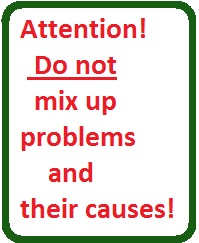
What do you think the causes are? What solutions can you suggest?
Formula:
- Write an introduction to the topic.
- Describe 3 causes of the problem (with examples).
- Propose 3 corresponding solutions.
- Write a short conclusion giving your view.
Plan / Structure:
- Paragraph 1: Introduction
- Paragraph 2: Cause 1 + Solution 1
- Paragraph 3: Cause 2 + Solution 2
- Paragraph 4: Cause 3 + Solution 3
- Paragraph 5: Conclusion
Paragraph 1 — Introduction
Introductory phrases:
- It is widely observed that...
- In recent years, there has been growing concern about...
- One of the most pressing issues today is...
- This essay will examine the main causes of this problem and propose feasible solutions.
Sentence plan:
- In the current global context, (general background sentence).
- However, (rephrase the problem).
- This essay will examine the key causes of this issue and suggest practical solutions.
Paragraph 2 — Cause 1 + Solution 1
Introductory phrases:
- One of the primary causes of this problem is...
- A major contributing factor is...
- This issue largely stems from...
- One effective way to address this problem would be...
Sentence plan:
- One of the main causes of the problem is that (cause 1).
- By this, I mean (explanation in 2–3 sentences).
- For instance, (give a relevant example).
- A possible solution is to (solution 1).
Paragraph 3 — Cause 2 + Solution 2
Introductory phrases:
- Another significant cause is...
- In addition, this problem is aggravated by...
- A further issue lies in...
- To tackle this challenge, it would be advisable to...
Sentence plan:
- Another major cause is that (cause 2).
- That is to say, (explain the mechanism in 2–3 sentences).
- To tackle this issue, (government / institutions / individuals) could (solution 2).
- This would help because (brief rationale).
Paragraph 4 — Cause 3 + Solution 3
Introductory phrases:
- A third contributing factor is...
- Equally important is the role of...
- Moreover, this problem is linked to...
- The most sustainable solution would be...
Sentence plan:
- A third cause of this problem is (cause 3).
- To be more precise, (explanation in 2–3 sentences).
- As a result, (effect / consequence).
- The most practical solution would be to (solution 3).
Paragraph 5 — Conclusion
Introductory phrases:
- To sum up,...
- In conclusion,...
- Overall, it is clear that...
- In my view, the responsibility lies primarily with...
Sentence plan:
- To sum up, this problem persists due to (summarize causes 1–3).
- Unless (summarize solutions 1–3), it is likely to continue.
- In my view, the primary responsibility for resolving this issue lies with (responsible parties).
2. Opinion Essays
What is your view on...?
Structure:
- Introduction (introduce topic + state opinion clearly)
- Main Body Paragraph 1 (Reason 1)
- Main Body Paragraph 2 (Reason 2)
- Conclusion (reaffirm opinion)
Paragraph 1 — Introduction
Topic-introducing phrases (trend / controversy / concern / dilemma):
- In contemporary society, (topic) has become an important issue.
- In recent years, (topic) has attracted increasing attention.
- (Topic) remains a subject of ongoing debate in modern society.
- A growing concern in many countries today is (topic).
- There is a noticeable trend toward (topic).
- (Topic) presents a significant challenge in the modern world.
- Many individuals today face a dilemma when it comes to (topic).
Opinion-introducing phrases:
- In my opinion, ...
- I firmly believe that ...
- From my perspective, ...
- It is my strong view that ...
- I am convinced that ...
Phrases informing the reader that detailed explanations of the author's ideas will follow:
- This essay will outline the key reasons supporting this view.
- The following paragraphs will present the main arguments for this position.
- This essay will examine the principal factors shaping my opinion.
- The arguments below will explain why I hold this view.
- This essay will set out the main justifications for my stance.
Sentence plan:
- In contemporary society, (topic) has become increasingly relevant.
- In my opinion, (clear personal stance).
- This essay will outline the main reasons supporting this view.
Paragraph 2 — Main Body Paragraph 1 (Reason 1)
Introductory phrases:
- The main reason for my opinion is that ...
- One of the strongest arguments supporting my view is ...
- Firstly, it is important to recognise that ...
- A key factor influencing my position is ...
Example-introducing phrases:
- For example, ...
- For instance, ...
- A clear example of this is ...
- This can be illustrated by ...
- To illustrate this point, ...
- A real-world example of this would be ...
- This is evident in cases such as ...
Sentence plan:
- One of the main reasons I hold this opinion is that (Reason 1).
- In other words, (explain the idea in 1–2 sentences).
- For example, (give a relevant example or evidence).
- This demonstrates why (link back to opinion).
Paragraph 3 — Main Body Paragraph 2 (Reason 2)
Introductory phrases:
- Another important reason supporting my view is ...
- In addition, it can be argued that ...
- A further point in favour of this position is ...
- Equally significant is the fact that ...
Example-introducing phrases:
- For instance, ...
- One striking example is ...
- This can be seen in situations where ...
- To give a concrete example, ...
- A good illustration of this is ...
- This is particularly evident in ...
Sentence plan:
- Another compelling reason to support this opinion is (Reason 2).
- This means that (explain the idea in 1–2 sentences).
- A good illustration of this is (example).
- As a result, (reinforce personal stance).
Paragraph 4 — Conclusion
Conclusion-introducing phrases:
- To sum up, ...
- In conclusion, ...
- Overall, I remain convinced that ...
- For these reasons, I firmly believe that ...
- Taking everything into account, ...
Sentence plan:
- To sum up, I firmly believe that (restate opinion).
- The main reasons for this view are (briefly summarize Reason 1 and Reason 2).
- Therefore, it is clear that (final reinforcing statement).
To what extent do you agree or disagree with...?
IELTS Essay Template: “To what extent do you agree or disagree?”
This type of essay requires a clear position. The writer may fully agree, fully disagree, or partly agree, but the extent of agreement must be clear from the introduction.
Especially important: do not simply discuss both sides. State your own position clearly and make sure every body paragraph supports or qualifies that position.
Recommended structure
- Introduction: paraphrase the topic and state your position clearly.
- Body paragraph 1: give the first main reason for your position.
- Body paragraph 2: give the second main reason for your position.
- Optional concession paragraph: admit a limited opposite point, if you partly agree.
- Conclusion: restate your position and summarise the main reasons.
1. Full agreement / full disagreement
Introduction template:
It is often argued that [paraphrase the statement]. I completely agree/disagree with this view because [reason 1] and [reason 2].
Alternative introduction phrases:
- I fully support this view, mainly because...
- I strongly disagree with this statement, as...
- I believe this argument is convincing because...
- I find this view problematic, mainly due to...
- Although this opinion may seem reasonable at first, I do not think it is convincing.
Body paragraph 1 template:
The main reason why I agree/disagree is that [main idea]. This is because [explanation]. For example, [example]. Therefore, [link back to the question].
Body paragraph 2 template:
Another important reason is that [second main idea]. In other words, [explanation]. This can be seen in [example/context]. As a result, [final consequence].
Conclusion template:
In conclusion, I completely agree/disagree with the idea that [paraphrase the statement]. This is because [reason 1] and [reason 2].
2. Partial agreement: “I agree to a large extent”
This structure is useful when the student mostly supports one side but wants to recognise that the opposite side has some validity.
Introduction template:
It is often argued that [paraphrase the statement]. I agree with this view to a large extent, although I believe that [limited opposite point] should also be considered.
Alternative introduction phrases:
- I largely agree with this statement, although it may not be true in every situation.
- I agree with this view in principle, but I think there are some important exceptions.
- I mostly support this argument, provided that...
- I agree with the general idea, but not with its extreme form.
- While I accept that this view has some limitations, I still believe it is largely correct.
Body paragraph 1: main support
The strongest reason for supporting this view is that [main supporting reason]. This matters because [explanation]. For instance, [example]. Therefore, this argument is persuasive in many cases.
Body paragraph 2: second support
A further reason is that [second supporting reason]. This means that [explanation]. Moreover, [additional detail]. As a result, [link to your position].
Optional concession paragraph
However, I would not completely dismiss the opposite view. In some cases, [opposite argument] may be valid, especially when [condition/context]. Nevertheless, this does not outweigh the stronger argument that [return to your main position].
Conclusion template:
In conclusion, I agree with this statement to a large extent. Although [limited opposite point] may be true in certain situations, [reason 1] and [reason 2] make the view generally convincing.
3. Balanced partial agreement: “I partly agree”
Use this only when the task genuinely allows a middle position. The essay should not become vague: the exact condition or distinction must be clear.
Introduction template:
I partly agree with this statement. In my view, [side A] is true when [condition 1], but [side B] is more convincing when [condition 2].
Body paragraph 1 template:
On the one hand, there are situations in which [the statement is valid]. This is because [explanation]. For example, [example].
Body paragraph 2 template:
On the other hand, this view should not be applied universally. In cases where [different condition], it may be more reasonable to argue that [opposite/qualified view]. This shows that the issue depends largely on [key factor].
Conclusion template:
In conclusion, I partly agree with the statement. It is valid in situations where [condition 1], but it becomes less convincing when [condition 2].
Useful phrases for stating the extent
- Full agreement: I completely agree with this view.
- Full disagreement: I strongly disagree with this statement.
- Large extent: I agree with this view to a large extent.
- Partial agreement: I partly agree with this statement.
- Conditional agreement: I agree with this idea, but only under certain conditions.
- Qualified disagreement: I mostly disagree with this view, although it may be valid in some cases.
Teaching tips
- Especially important: the introduction must specify the extent of agreement.
- Do not write “I agree and disagree” without explaining the condition or distinction.
- For a full-agreement essay, both body paragraphs should support the same position.
- For partial agreement, the concession must not destroy the main position.
- Avoid over-aggressive phrases such as “the falsehood of the opponents’ idea”. Use neutral academic language instead.
- Do not use a separate “opponents’ paragraph” unless the essay is clearly a partial-agreement essay.
3. Direct double question essay [Or direct one question essay]
Direct double-question IELTS essay
A direct double-question essay asks two separate questions, so the safest structure is:
- Introduction
- Body paragraph 1: answer Question 1
- Body paragraph 2: answer Question 2
- Conclusion: summarise both answers
Especially important: in the introduction, students should answer both questions immediately. They should not postpone their position or main answer until the conclusion.
Example task:
Many people today choose to live alone.
Why is this happening?
Is this a positive or negative development?
This is not mainly an agree/disagree essay. The student must directly answer both questions.
Universal structure
Introduction
Sentence 1: paraphrase the topic.
Sentence 2: give a direct answer to both questions.
Template:
In recent years, [topic] has become increasingly common. This trend is mainly caused by [reason 1] and [reason 2], and I believe it is largely [positive / negative / mixed] because [main judgement].
Example:
In recent years, living alone has become increasingly common, especially in large cities. This trend is mainly caused by greater financial independence and changing social values, and I believe it is largely a mixed development because it gives people more freedom but may also increase loneliness.
Body paragraph 1 — answer Question 1
This paragraph should answer the first question only, usually about causes, reasons or factors.
Template:
One major reason for [trend/problem] is [reason 1]. This is because [explanation]. Another important factor is [reason 2], as [explanation]. As a result, [general consequence connected to the trend].
Example:
One major reason for the rise in one-person households is that many adults are now financially independent enough to live separately from their families. This is especially true in urban areas, where young professionals often move for work or study. Another important factor is a shift in social expectations, as marriage and family life are no longer seen as compulsory stages of adulthood. As a result, living alone has become a normal lifestyle choice rather than an unusual situation.
Body paragraph 2 — answer Question 2
This paragraph should answer the second question. It may ask whether the development is positive or negative, what its effects are, what solutions are possible, or what governments and individuals should do.
Template for a positive/negative development question:
In my view, this development is [positive / negative / mixed]. On the one hand, [benefit/drawback 1], because [explanation]. However, [opposite side if needed]. Therefore, although [concession], [final judgement].
Example:
In my view, this development is mixed. On the one hand, living alone can be positive because it allows people to develop independence and organise their lives according to their own priorities. However, it may also weaken daily social support, particularly for older people or those who work remotely. Therefore, although living alone can offer personal freedom, it becomes problematic if it leads to isolation.
Conclusion
The conclusion should answer both questions again, briefly.
Template:
In conclusion, [trend/problem] is mainly the result of [reason 1] and [reason 2]. While it can [positive side], it may also [negative side], so I consider it [final judgement].
Example:
In conclusion, the increase in living alone is mainly the result of financial independence and changing attitudes to family life. While it can give people greater freedom, it may also reduce social contact, so I consider it neither entirely positive nor entirely negative.
Full universal template
In recent years, [topic] has become increasingly common / has attracted considerable attention. This can be explained mainly by [reason 1] and [reason 2], and I believe that it is [largely positive / largely negative / a mixed development] because [main judgement].
One major reason for [trend/problem] is [reason 1]. This is because [explanation]. For example, [example]. Another important factor is [reason 2], as [explanation]. As a result, [summary of why the trend/problem happens].
In my view, this development is [positive/negative/mixed]. On the one hand, [first effect/argument], because [explanation]. On the other hand, [second effect/argument], which means that [result]. Therefore, although [concession], [final judgement].
In conclusion, [trend/problem] is mainly caused by [reason 1] and [reason 2]. While it may [positive side], it can also [negative side], so it should be seen as [final position].
Teaching tips
- Especially important: the introduction should contain a short answer to both questions.
- Body paragraph 1 should answer the first question, not discuss the whole topic generally.
- Body paragraph 2 should answer the second question directly.
- The conclusion should not introduce a new idea; it should briefly summarise both answers.
- For double-question essays, a simple plan is often best: BP1 = Why? and BP2 = Good/bad? / Effects? / Solutions?
4. Two sides essays
Some people think.... Others think...Discuss both views and give your opinion.
Universal template (Discuss both views + give your opinion)
INTRODUCTION — paraphrase the topic + present both views + state your position
Topic-introducing phrases:
- In contemporary society, the issue of (topic) has become increasingly relevant.
- In recent years, growing attention has been paid to (topic).
- (Topic) remains a subject of ongoing debate in many countries.
- Opinions remain divided over whether (rephrase the question).
Introducing both views:
- While some argue that (View A), others maintain that (View B).
- There are two contrasting perspectives on this issue: (View A) versus (View B).
- Supporters of opposing positions offer different interpretations of this matter.
Stating your position:
- In my view, (your opinion) is more convincing.
- On balance, the argument in favour of (your opinion) appears stronger.
- This essay supports the view that (your opinion).
BODY PARAGRAPH 1 — discuss View A (often the opposing side)
Introducing View A:
- Proponents of this view argue that...
- Supporters of this position maintain that...
- According to this perspective, ...
Explanation starters:
- This can be explained by the fact that...
- The reasoning behind this argument is that...
- In essence, this position suggests that...
Example starters:
- For example, ...
- For instance, ...
- This argument can be illustrated by ...
Refutation starters:
- However, this argument fails to account for...
- This view overlooks the fact that...
- Although this position appears reasonable, it has notable weaknesses.
BODY PARAGRAPH 2 — discuss View B + support your position
Introducing View B:
- By contrast, others argue that...
- Supporters of the opposing view contend that...
- From an alternative perspective, ...
Developing the argument:
- One key reason supporting this view is that...
- Another important consideration is that...
- Moreover, ...
Example starters:
- To illustrate, ...
- A clear example of this is ...
- This is particularly evident in cases where ...
CONCLUSION — summarise both views + reaffirm position
Conclusion starters:
- In conclusion, ...
- On balance, ...
- Overall, although (View A), (View B) appears more persuasive.
Show/Hide example essay (sportsmen’s salaries)
Some people think that sportsmen should not be paid such high salaries as they get today. Others, however, think there is nothing wrong with that. Discuss both views and give your opinion.
Give reasons for your answer and include any relevant examples from your own knowledge or experience.
INTRODUCTION
Whether sportsmen deserve their high incomes remains debatable. The issue of large financial rewards paid to professional athletes has generated heated discussion between critics and supporters of such remuneration. Despite objections, high earnings for elite athletes appear largely justified.
BODY PARAGRAPH 1 — Opposing view
Many critics argue that athletes’ salaries are excessively high. One common claim is that some sportsmen use performance-enhancing drugs, meaning their achievements may not always reflect genuine effort. Another argument suggests that professions such as scientific research contribute more directly to societal progress and therefore deserve greater financial recognition.
REFUTATION (logic gap resolved)
Although concerns about doping appear valid, this argument overlooks the existence of strict anti-doping regulations and continuous monitoring in professional sport. Modern testing systems, career-long screening, and severe penalties significantly reduce the likelihood of unfair competition. Furthermore, the dedication and physical strain endured by elite athletes remain substantial regardless of isolated violations, weakening the claim that their success is primarily artificial.
BODY PARAGRAPH 2 — Supporting view
Supporters of high salaries in sport argue that elite athletes devote their entire lives to training, often enduring physical and psychological pressure that few individuals could tolerate. Sporting excellence requires exceptional talent, discipline, and sacrifice, and outstanding performers may reasonably expect financial reward. Moreover, sporting achievements can contribute beyond entertainment, influencing technology, health sciences, and media industries.
CONCLUSION
In conclusion, while critics question the legitimacy of extremely high salaries in professional sport, the argument in favour of rewarding elite athletes remains more persuasive. Their achievements, dedication, and cultural influence justify substantial financial compensation in modern society.
Discuss the advantages and disadvantages of ...[and give your own opinion]
Plan:
Para1: Introduction [a fully paraphrased heading]
Para2: 1 advantage with example
Para3: 2 advantage with example [optional unless required in the task]
Para4: 1 disadvantage with example
Para5: 2 disadvantage with example [optional unless required in the task]
Para6: Conclusion + your opinion [if required]
Template
INTRODUCTION
1. There is no denying the fact that the phenomenon/ technology / practice / policy / … of (summary of the question) is unprecedented/gaining wide currency. At the same time, due to .... it appears to be highly debatable and thus worth reasoned discussion. // while the custom of ... is ubiquitous across the globe, it is still highly arguable thus remaining of paramount importance/. In spite of a plethora of merits, yet, numerous demerits can be noticed, which will be elaborated in the upcoming paragraphs.
ADVANTAGES
2. Initiating with the best possible benefits, the most significant advantage is ...……. ADVANTAGE1 …....... To cite an example, …………EXAMPLE1......... As a result, ….CONSEQUENCE1 …/ which speaks of positive developments in... BENEFIT1...
3. Along with it, ….ADVANTAGE2.................Illustartive of...is …………EXAMPLE2......... Undoubtedly, this /, which eventually leads to ….CONSEQUENCE2 … / brings about...BENEFIT2
DISADVANTAGES
4. On the paradoxical side / That being the case, there are many drawbacks as well. First and foremost, ...DISADVANTAGE1... For instance, ……EXAMPLE1...... which in the long-run will ...
5. Secondly [primitive connector],/Apart from…, / Another ...is…DISADVANTAGE 2 …. , which is illustrated by / can be observed in / For example, according to,…EXAMPLE2… / For instance, ……EXAMPLE2...... Consequently,... RESULT2...
CONCLUSION
6. To conclude, without any doubt this is a mixed bag / a highly controversial issue / practice / thing / a double-edged/two-edged sword/weapon. Even though this approach/method/phenomenon/development/… has many positives, its / the negative points must not be underestimated. If I were to provide my take on …, … seems…. / …wouldn’t… / …would advocate caution / a cautious approach to the matter / would rather + Past Simple / would find it useful / extremely beneficial to…..
Do the advantages of... really outweigh the disadvantages [или наоборот]
Template1: Advantages outweigh disadvantages
Introduction [с введением своего мнения]
-It is often debated .... - Whether.... or.... has been a subject of heated debate. - This essay will analyze this issue in an effort to prove .... better than....
Advantages [идут первыми в теле эссе, потому что перевешивают]
- Firstly, [topic] has/offers several significant advantages / benefits, including... - In addition to it,/ Moreover, [another benefit](,which) further strengthens its value. - It is thus clear that /These factors make it evident that [topic] has/brings certain undeniable benefits/pluses.
Disadvantages and their weakness [идут вторыми, потому что перевешиваются]
- Despite the above advantages, there are potential drawbacks to / shortcomings of/ concerns about [topic]/certain drawbacks of [topic] cannot be ignored
- For example, [state a disadvantage], which could potentially lead to.../ If... it could ...
- However, although there is a concern that ...., it should be remembered that [rebuttal to the disadvantage].
(- In other words, this is a practice that curbs/raises the possibility of.... - Further, .... also …).
- Thus, after analysis, the disadvantages to [topic]are not quite as discouraging as they may at first seem./Therefore, while there are some concerns, they are generally not as consequential as the advantages.
Conclusion [В заключении заново формулируем свое мнение о том, что перевешивает что]
- On balance, the above discussion makes clear that, despite select disadvantages, ..../the above discussion illustrates that the benefits of [topic] outweigh its disadvantages, making it a preferable choice overall.
- Thus, it can be concluded that [restate opinion]. Ultimately, [give a new idea]
Template2: Disadvantages outweigh advantages
Introduction
- Whether [topic] has more advantages or disadvantages is often debated.
- This essay will analyze this issue to demonstrate that the disadvantages of [topic] outweigh its benefits.
Disadvantages
- Firstly, [topic] presents several significant drawbacks, such as...
- Additionally, [another disadvantage] further undermines its value.
- It is therefore evident that [topic] has undeniable limitations.
Advantages and Their Weaknesses
- Despite these disadvantages, certain aspects of [topic] may appear beneficial.
- For instance, [mention a minor advantage] might seem appealing; however, it should be remembered that [counter-argument].
- In other words, these advantages do little to offset the considerable drawbacks.
Conclusion
- In summary, despite a few potential benefits, the disadvantages of [topic] clearly outweigh them.
- Therefore, it is apparent that [restate opinion].
- Problem / Cause / Solution Essays
(“State some reasons… suggest solutions”)
-
- More and more people rely on private cars as their main means of transportation. What problems does this cause? What solutions can you suggest?
-
- An increasing number of professionals leave poorer countries to work in developed nations. What problems does this cause? What can be done to address it?
-
- The internet has transformed how information is shared but has also created new problems. What are the most serious problems, and what solutions can you suggest?
-
- Despite advances in agriculture, many people still go hungry. Why does this happen? What can be done about it?
-
- Many children spend too much time playing computer games. What problems does this cause? What solutions can be suggested?
-
- Plastic waste is increasing worldwide. What problems does this create? How can these problems be solved?
-
- Many people suffer from sleep deprivation. What problems does this cause? What can be done about it?
-
- Urban overcrowding causes serious social and environmental issues. What problems does it create? What solutions should governments adopt?
-
- Cybercrime is increasing. What problems does this cause, and what solutions can individuals and businesses take?
-
- Young people are using drugs at younger ages. What are the causes and effects? What can society do to reduce this problem?
- Opinion Essays
(“What is your view?” / “To what extent do you agree?”)
-
- A growing number of young people are changing careers. What are the reasons? Do the benefits outweigh the drawbacks?
- Education should be free and fully funded by the government. To what extent do you agree or disagree?
- Some people believe space exploration is a waste of money. To what extent do you agree?
- People should live in smaller towns instead of large cities. Do you agree or disagree?
- Working from home is more beneficial than working in an office. To what extent do you agree?
- Governments should ban dangerous sports. To what extent do you support this idea?
- Social media does more harm than good. Do you agree or disagree?
- Technology is reducing real human interaction. Do you think this is a positive or negative development?
- The best way to reduce crime is stricter punishment. Do you agree?
- University education should focus more on practical skills than theory. Do you agree or disagree?
- Direct Question Essays
(Single or Double Question Prompts)
-
- Why do many people fail to achieve work-life balance? What can be done to solve this problem?
-
- Why do young people leave school early? What measures can reduce this trend?
-
- What are the causes of obesity among children? What consequences may result?
-
- Why are people becoming less physically active? What can be done to change this?
-
- Why are people delaying marriage and parenthood? What effects does this have on society?
-
- Why are traditional medicines becoming more popular? Is this positive or negative?
-
- Why are people spending more time at home? What effects does this have on society?
-
- What causes loneliness among elderly people? How can this issue be addressed?
- Two-Sides / Discussion Essays
(“Discuss both views…” / Advantages vs Disadvantages)
-
- Some people think athletes earn too much money. Others think their salaries are justified. Discuss both views and give your opinion.
-
- Some believe technology improves relationships, while others think it damages them. Discuss both views and give your opinion.
-
- Some people think museums are a waste of public money. Others believe they are essential. Discuss both views.
-
- Living in large cities has advantages and disadvantages. Discuss both and give your opinion.
-
- Online education has more advantages than disadvantages. Do you agree?
-
- Some people think children should be taught financial skills at school, while others disagree. Discuss both views.
-
- Tourism brings economic benefits but also environmental damage. Do the advantages outweigh the disadvantages?
-
- Some believe competition is beneficial, while others think cooperation is more important. Discuss both views.
-
- Fast food has made modern life easier, but has created health problems. Discuss both sides.
✅ CAE (C1 Advanced) — Recent Essay Themes (Comparable Types)
- CAE prompts aligned with IELTS-style reasoning:
- Young people are losing traditional values. Discuss causes and effects.
- Should governments fund cultural institutions or sports facilities? Discuss and justify.
- Mass tourism damages local culture. Do the benefits outweigh the disadvantages?
- Globalisation is causing cultures to become more similar. Is this a positive or negative development?
- Music, fashion and film influence young people’s identity. Discuss effects.
- Cities need more green public spaces. Discuss advantages.
- Technology improves learning but reduces creativity. Evaluate both sides.
- Public money should prioritize health over entertainment. Discuss.
|